

Ethan Iverson’s newsletter on the history of The Bad Plus—well worth your time to read—has been percolating in my mind for a couple of weeks, waiting to collide with some other things before I could articulate anything around it. That took hearing some performances of what is generally considered archaic, if not dead, music, i.e. classical concertizing of the music of composers like Shostakovich, Schumann and Janáček, and William Dawson and Samuel Barber. That was old stuff that sounded new.
Like a lot of people, the first I heard of the group was their 2003 album These Are the Vistas, on a WKCR broadcast. Inside that, the track probably first (and/or most frequently) encountered was the explosive arrangement of “Smells Like Teen Spirit.” It hits like a mission statement: we aren’t a jazz piano trio that plays covers of rock tunes (Brad Mehldau had already been playing “Exit Music for a Film” and “River Man”), we’re a power trio that plays rock harder than most rock bands.
There was more of course, the elegance of “Everywhere You Turn,” the takes on Aphex Twin and Blondie. It’s a hell of a record from a hell of a band that was obviously exciting and also musically skillful and deep. And it was a fresh thing, it struck me that The Bad Plus was a great prog-rock band masquerading as an acoustic jazz piano trio (certainly cemented by the terrific Prog album, with arrangements of “Everybody Wants to Rule the World,” “Life on Mars?”, and “Tom Sawyer”—compare that last to Mehldau’s version on his execrable Jacob’s Ladder and you’ll hear the difference between musicians who love other music and one who condescends to it).
Through the years, the group went through Ship-of-Theseus changes: Iverson left and was replaced by Orrin Evans, then it became a quartet with guitarist Ben Monder and saxophonist Chris Speed, while the current and final version has saxophonist Chris Potter and pianist Craig Taborn fronting the original rhythm section of Reid Anderson and Dave King. A hell of a band, a few of them, but not the same one.
Blame it on the Youth
Now, this isn’t about any comparison between better and worse, then and now. It’s about how something that’s new might change through time, and how it might remain new even as time goes on. I have my favorite Bad Plus albums and tracks, and to me These Are the Vistas is the best album. The one that followed, Give, is also very good, but felt quite different to me. Iverson writes that, “The blessing and the curse of early Bad Plus was the focus on rock covers,” and I get what he’s saying but to me it was less about the tunes than the sound of a band that had found their own path. Give is the same path, maybe they felt locked in, but there’s less surprise there.
Musicians can capture the idea of youth, ideas that are new and sound that way every time you hear them. Musicians can also embrace aging and how that process moves through a person. There is value to each, and a danger that links them which is trying to repeat initial success. Beethoven always sounds fresh to me, so do Stravinsky and Miles Davis, but they didn’t repeat past success so much as maintain a core set of values and keep moving—and one of those values was moving on to the next thing, being curious about what else they might find within themself.
What seemed to happen a bit with The Bad Plus is that it was tricky to balance their own original music and ideas with the covers—which they were interested in doing—that brought them the public success that made it possible to hold the band together for many years. And for jazz in the 21st century, it is an exceptional feat to maintain a consistent working band for any period of time. Once Iverson left, this was still a very fine jazz ensemble, but it seemed more of a brand. Iverson makes a strong case for their original music and Anderson’s skill as a composer, but my personal feeling is that there’s an appreciable and important difference between being a one-of-a-kind group and a very fine group that’s much like other very fine groups.
What’s the musical fountain of youth? I wonder about this as, for example, I not only have deep love for Elvis Costello but also how he embraced getting older, how he allowed age to change him and the music he made. It’s an intellectual and aesthetic failure on the part of critics to love something an artist does and then not be able to accept that they may change, and take those changes on their terms. It’s really how we end up with the incredibly dull, rote, vapid lineup of Best New Artists at the Grammys this year, mechanically mugging through stuff that’s been done a million times already.
“Everybody Wants to Rule the World” links to Tears for Fears, and it’s astonishing how much they changed through their first three albums. The aesthetic and intellectual spirit driving them makes even the first album sound fresh, unique, even though it’s over forty years old. This was a band that was also questioning what it did and where it was going, and so you get music that is always dynamic and individual. And has any band travelled as far, and in such unexpected directions, in as short a time as The English Beat? They put out three albums, one a year from 1980-1982, and where they ended up and came to an end with the third one was universes away from the first.
I don’t have a specific explanation for all this, I don’t think there is one. And this is also not just a matter of criticism but taste. I recognize that I first heard The Hurting and I Just Can’t Stop It when I was a teenager, my brain still plastic, and these albums carved out new and permanent synapses that to this day light up with pleasure when I hear that opening snare tattoo:
Even as they moved through vastly different, and exceptionally well done, pop styles, the English Beat always had that unique groove, simultaneously pushing the beat while laying back on the pulse. And Tears for Fears always had compositional concepts that took surprising turns from what each song seemed to first lay out. It was like the engines they used, taking them from one car to another. The Bad Plus laid out their own design, and kept refining it through the years, until it became something different in every way from the original. There’s no right or wrong way to this, it really boils down to how young we want to feel.
(Old and New Jazz) Album(s) of the Week
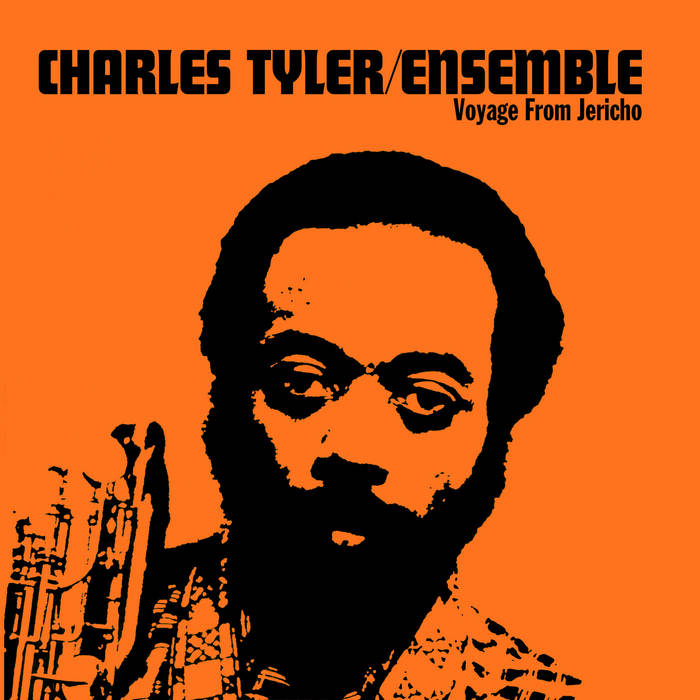
This is an invaluable reissue. Tyler was mainly a baritone saxophonist with a chewy, querulous sound and style, mixing form and freedom. He was with Albert Ayler at the start of Ayler’s career, but decamped to Europe in the early 1980s while playing with Sun Ra, at a time when that meant a musician dropped off the radar of US-based listeners. For this 1975 album, he’s got the young Arthur Blythe with him, and as great as it is to hear Tyler, it is wild to hear Blythe still figuring out what he wanted to do. That rapturous tone is there, but the way he puts phrases together sounds like he’s arguing with himself over not just what language he wants to use, but what he even wants to say. Talk about fresh.
Cellist Christopher Hoffman is not necessarily still young but he’s still in the process of discovering what he wants and can do. This is a solo album, Hoffman overdubbed and processed in the studio, and it is a little reminiscent of These Are the Vistas because it’s a collection of pithy, well-shaped rock style tunes. It’s really a solo cello prog-ish (in attitude, not the complications) rock album. There are times when he seems dangerously close to relying on clichés but always pulls things out, then you realize he just really knows how to make a song work. A very satisfying record.
thanks for thoughtful comments! I appreciate your take.