
It's Not You, It's Me
From the backrooms of my mind

Yes, there’s been a few weeks without anything new here. I have been writing, there’s been a couple concert reviews, and I’ve had a couple things Bandcamp published (you may enjoy this guide to the great Mal Waldron), and there’s always the stuff that no one on the outside sees, like brainstorming and crafting new freelance pitches every week. That’s all still a lot of words.
But none here. I did have about ten days last month when I needed to refresh my mind a bit, to take the gaseous, ill-formed notions and impulses and reactions that burst open and give them some boundaries and shape and definition. And I’ve been digging into a lot of books lately, especially criticism and existentialist philosophy, and working out future plans for things, especially the upcoming Coltrane centennial and Steve Reich’s 90ᵗʰ birthday. So, again, words are getting tossed around and fed out.
But not here, and it’s nothing to do with any of you, but with me. Better put: with me, HERE, on this screen and template that this service devised. And I have been so sick of and exhausted by the computer screen and the web page that is my main means of reaching you, or any other reader, here and all the other places that let me contribute.. Not to sound too much like Brigadier General Jack D. Ripper, but this all came to me after finishing and sending out a 700 word article to Playbill for the start of the New York Philharmonic’s season. Which come to think of it means that maybe I took a little vacation because having to look ahead to the fall, already, means time to start putting more words into empty digital spaces, the backrooms of the web that on my end I have to keep filling to make any cash at all.
Now, more on typing. When I’m hitting the keys on my laptop and letters and words are appearing consecutively on the screen, I’m typing. That’s self-evident, but points to an acute distinction between typing and writing; though those two things can overlap and are thought of as the same thing, they are NOT THE SAME THING!
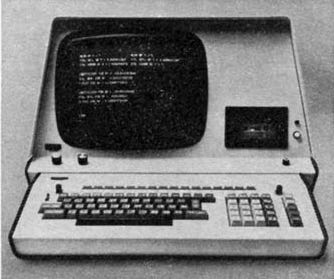
I have been typing into screens for a long, long time. I’ve used DOS-based Word, I’ve used Lotus Notes. I’ve used a Wang. I’ve saved to 3.5” diskettes. The first piece of writing I was ever paid for, a review of Steve Lacy’s album The Window, I typed on a Royal manual typewriter and sent to the publication in the mail. The US Post Office mail.
That’s a lot of screens and a lot of keyboards. That was a lot of not just Macs but Windows-based desktop computers with various keyboards; I didn’t touch a laptop keyboard until that early Mac laptop that you jammed into a docking station. That turned out to be an engineering mistake. I recognize the importance of a good keyboard, it is the interface between the hands and the digital world, and even the best laptop keyboard is nowhere near a mediocre mechanical keyboard, the keys on a slope and the touch of feedback that tells the brain, through the fingers, that you’re accomplishing something. But the keyboard, no matter how fine, is not the thing that writes or thinks, it is the tool for typing. As redundant as this is getting, I don’t feel I can hammer it enough that typing is the method for getting my thoughts out to readers, but it’s not thinking, nor is it writing. And again, the typing exists because the screens have taken over.
Pardon me for getting a little tech-nerdy, but the details of how I’ve been trying to fill those are essential. For a number of years, I’ve been typing (not writing, I’ll get to that later) into a Mac OS application called Ulysses, which is a text editor that holds all the documents you’re working on inside it, easily available in the interface, rather than as files you open up from a hard drive. Ulysses has been useful to me because usually I have several pieces of short writing to do concurrently, each going to a different publication (including this newsletter) and in either digital or print medium, or both. Ulysses also supports Markdown, which means I can format everything, italics to web links, right on the screen, through typing, and they will come out just right no matter if the final result is a .docx or .html file.
Here’s an example: the paragraph above and the sentence you are reading right now are at the moment of conception being written out in long hand. I am writing out by hand because I’m thinking about what I’m trying to tell you and writing is thinking (Neal Stephenson has a recent post on the value of writing by hand). You are reading this because I eventually transferred this writing and thinking into a screen, and edited it (even if it doesn’t seem I did!), but that wasn’t the thinking part, i.e. the words currently you’re currently passing your eyes over aren’t any kind of thinking. Just typing. This is far less a revelation than a practical reminder that seeing words in a digital context is no guarantee that there was any thought behind them—using AI to generate digital text is a complete abdication of thinking, it is the empty content of bits and pixels without any intent to say anything or do anything except fill empty digital backrooms with more digital emptiness. It is clutter, garbage, in digital spaces.
Digital spaces are not only ubiquitous if you use a computer but are fundamentally the same, flat, textureless mediums that destroy so much style that you have to fight to apply distinctive qualities from your own experience onto the images of words your eyes are viewing. And even though the article in question will end up in print, where even the quality of texture for the hand and eye give it far greater resolution of information than a screen, working in it (which also means searching through and editing transcripts of interviews I conducted) digitally, typing it, had me feeling awful at the end, like I had been boxing with empty space and got my ass kicked, like my head had gotten filled with hot cotton balls. Instead of feeling I nailed another deadline and would be getting a modest check, there was nothing but dissatisfaction and even some despair.
That had been creeping up on me the past few months. I had tried some different note taking and writing methods, but nothing alleviated it. To get this out, I experimented with a different routine (making written pieces for digital media means that writing is not just writing, it is a “workflow” that follows a linkage of tools and techniques), not working in Ulysses for this assignment but another application, Scrivener. I’m used this for my two books because it’s a good way to maintain different versions of things, separate out chapters then collate them later, and keep research materials available through the same interface. And it was using it and getting to the peak of the shitty feeling that truly made me realize that I’m so fucking sick of this goddamn screen. And that I would much rather put my effort into writing/thinking than typing. That I never want to type again.
The interface is the problem. Everything goes into a window in a screen, so all words look like the same kind of thing. Typing has the illusion of writing, and typing into TextEdit or Pages (or Word, fuck me) produces the response from the software of putting the words on the screen, and that has permeated public language and discourse with the compliance assumption that word processing programs are writing programs, and that using AI is writing. Both are ludicrously false. Writing can, and should happen anywhere but inside a word processing application, which is for preparing the final document that will contain the writing/thinking, and using AI means not just avoiding thinking but spending money on a service that creates the illusion that it is thinking for you, and produces content engineered for a LinkedIn posts.
Where thinking goes to die
One falsely dramatic and profound
Line break
At a time
The typing, then, the unavoidable engagement with the interfaces of our digital world, is a necessary evil but also, usually, an impediment to thinking and writing. I’m not sure if there’s a good solution, a way to get the writing in front of your eyes with the digital intermediation. A process that puts has the least amount of digital friction and enervation, and the most amount of thinking. I’m always looking for one, but not sure it exists. Lately, its been drawing me toward smart typewriters. The idea of a tool that has a good physical quality keyboard—extremely important for typing—and can only record a sequence of letters—yes, there’s a screen but it doesn’t have any other features of a computer screen—seems to me to be a closer and more honest combination of writing/thinking with typing. Its the real allure of a manual typewriter, which is that it’s a tool for one kid of work, thinking, updated so that the text is not just words and ideas but digital information that can be shared and processed.
Part of the fascination is that I can’t afford anything like that, it’s desiring the unobtainable. Another part of the allure is it’s had me realizing that 100 or so years ago, when writers were buying manual typewriters because it was the essential tool, they were paying the contemporary equivalent of $700-$1000. It was agonizing, but necessary. They were making what was a dangerous sacrifice because this is what they did, this is who they were, and while they agonized over finding a substantial audience, they had no other ideas for how to reach or make it other than to do what seemed like their best work. At least fail honorably. Maybe I just need to feel more like a semi-accomplished critic with some useful things to say who will never have a large audience. That will take a good more thinking, which I’ll be doing for you, letter by letter, word by word. Writing.
There, I did it. I got the end of this “workflow,” I turned thinking into symbols on a screen for you. Okay. That means I can do more. More to come.
I went to college with a new typewriter in 1984, and you could hear typing in the hallway. The very next year you started to hear dot-matrix printers. I tell people I wasn’t just in the last generation to type, but literally in the last cohort.
It may all depend on how you conceive of the relationship between thinking, organizing, and presenting your ideas. I almost never write full sentences on paper, but I do turn to paper to organize my thoughts. Right this moment my dining table is covered in notecards: I hit a dead end on the screen and needed to reorganize my thoughts.
I tell my my advanced students: when you develop expertise your thinking becomes a hypertext with all the ideas linked to each other, like a cork board with red yarn linking pictures (TV trope for “obsessive detective trying to unravel a conspiracy”). But I’m asking you to write a series of chapters: you have to chart a path that lets you link ideas most clearly to tell the story you are telling today. (Maybe you’d tell a different story tomorrow, but today you have to choose one through line and stick to it.)
Touch typing and drivers' ed – the most useful courses I took in high school