
Minimalism at the End
When the music stops

The setting sun, and the music at the close …
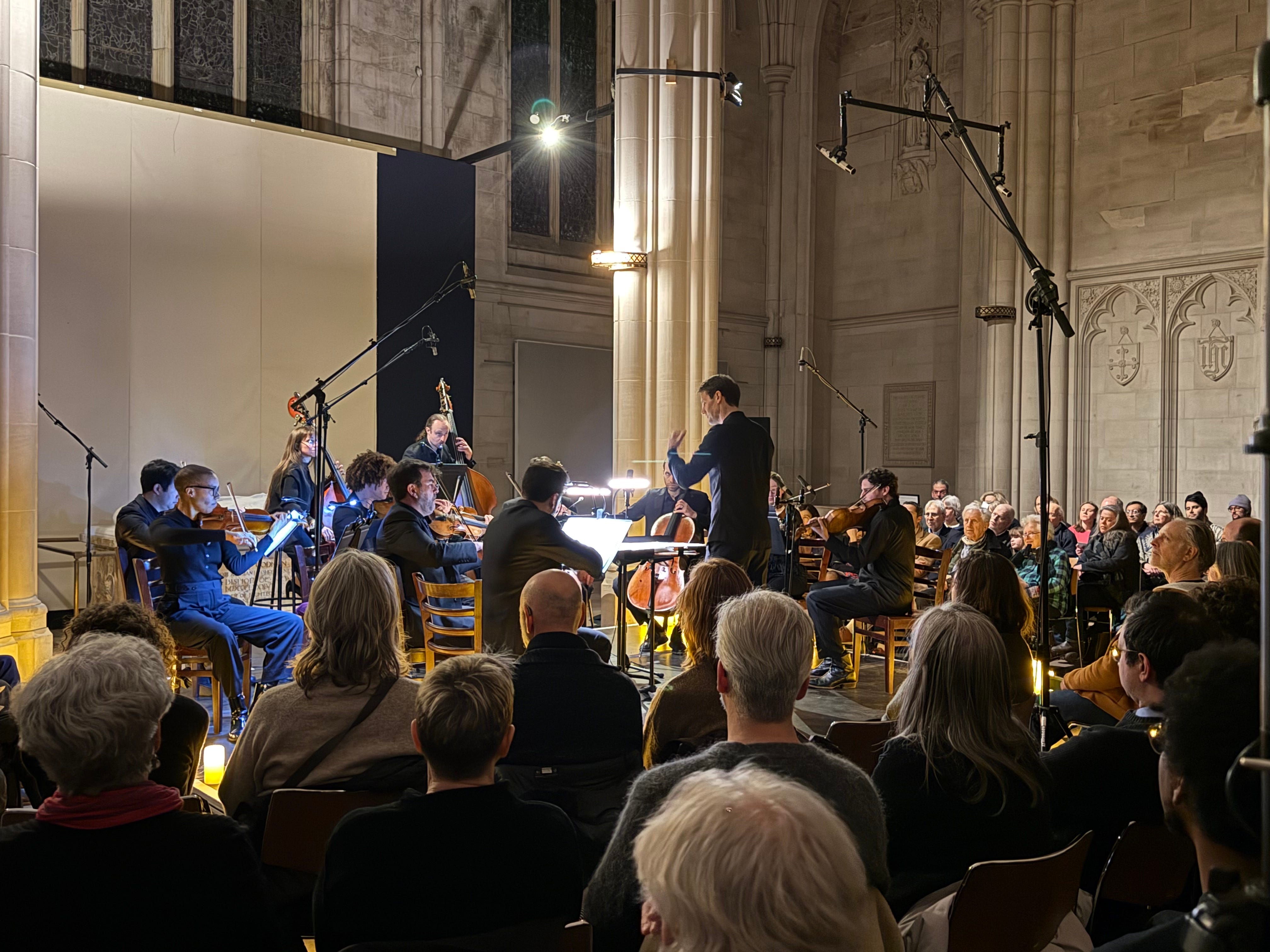
Last Thursday evening, I attended a fine concert of Arvo Pärt’s music for string orchestra, played by the Experiential Orchestra with conductor James Blachly. Earlier that morning, I was tuned in to WKCR when the composer’s son Michael appeared on the Cereal Music show. He of course had great insights into the challenges of playing Pärt, especially how musicians have to forget all their ideas about interpretation and expression from the core classical repertoire with Pärt, how they needed to be willing to expose themselves to a kind of child-like simplicity without the usual gestures that place music into a kind of superego of performance, a style that we can admire separate from the essence of the musician. This is very true in Pärt and to fundamental elements of music making—the sustained, low volume pitch on a violin, senza vibrato, is psychologically more demanding than shaping that same pitch with vibrato and changing dynamics, it is a kind of ego-destruction to create beauty and truth.
But what struck me like a lightening bolt was when Michael mentioned, just in passing, that his father no longer writes music. Now 90, there are no more new works coming from the most performed living composer. And it seemed to me that the end of his composing was not just about himself, but about the minimalist music movement. Pärt was not an original minimalist, but found his way independently to becoming one of the most important, with arguably the greatest public presence. He is an avatar of the generation, though, and of precisely where in time it came from: he and Terry Riley turned 90 last year, Steve Reich will on October 3, and Philip Glass next January 31 (Meredith Monk, a few years younger, turns 84 on November 20).
Monk is still composing, so is Reich (there’s a US premiere scheduled for his birthday celebration concert at Carnegie Hall), so is Glass, so is Riley (though he hasn’t been making minimalist music for the last sixty years). How much is left from them is unknown, the same for how much time is left, but we are in the tail end of things. And when they’re gone, there’s nothing left of minimalism, it will shift from being a living movement to a part of history and tradition.
No one has directly followed the original minimalist ideas, it became post-minimalism the moment the following generation picked up some of the tools and put them to use in more expansive contexts. And my honest feeling is that it happened even before Louis Andriessen, John Adams, and the Bang on a Can composers started incorporating minimalist techniques into music that adapted more mainstream formal and stylistic qualities—one thing I look at in my book is how minimalism became post-minimalism once Reich and Glass moved on from Drumming and Music in Twelve Parts (Reich talks about when he made the below piece, it was the first time he had changed chords in EIGHT YEARS! So maybe this was the moment.):
… As the last taste of sweets, is sweetest last …
Artistic movements usually don’t work this way. New musical styles move their way through changes and adaptations by others and become another in the set of possibilities, but the recognizable core usually remains intact as it descends through time. You can hear this with everything from fugues to bebop. But this never happened with minimalism. There’s no one making phase pieces, or adding and cycling through repetitive contrapuntal phrases, and there really wasn’t anyone doing what Reich and Glass were doing both contemporaneously and concertedly, not even Jon Gibson. Certainly no one else has been working with physicalized minimalism in theater like Monk, no one using Pärt’s tintinnabuli ideas.
These are immensely compelling musical ideas, so I’m not sure why that is. It feels like a part of any explanation is that what Pärt, Reich, Glass, and Monk do starts with material stripped down to the simplest level—certainly this is the interpretive challenge in Pärt—and is so unadorned, such a complete integration of technical means and style of expression, that there’s likely too few composers who actually have the personalities that can do the same. There is an asceticism to Pärt and Monk that is acutely balanced between sensations of spirituality and mysticism and a Stravinskyian division between the artist and the music they make. This is also true with Reich and Glass, whose music can sound lush but is bare-bones in its construction. It would be impossible to follow what they have done without sounding embarrassingly derivative.
What we will loose is an incredible living lesson in music history, or music that shows how even the ancient past is meaningful to the present. Taken together, Pärt, Reich, and Glass cover nearly the entire preceding classical tradition, from plainchant to the late 19th century. There’s very little else in any music, even one as history conscious as classical, that does this. It’s been remarkable to witness this historic development as it happens. One of the great features of mass media is that we it not only documents the past but through it we can experience cultural revolutions as they happen
Minimalist music often ends in a totally different way than other kinds. Because the teleology is about describe how time works and showing its passing, there’s not the same organizing principle of working out some kind of abstract logic or emotional narrative and bringing it to a conclusion, there’s no narrative. So much of the music just finishes by stopping. For music that’s about time, it’s also appropriate to life as well. Everyone’s narrative eventually just stops. So maybe it’s a greater truth that minimalism will come to an end when the stories of each of these artists stop too.
… Writ in rememberance more than long things past.
Album of the (Past) Week
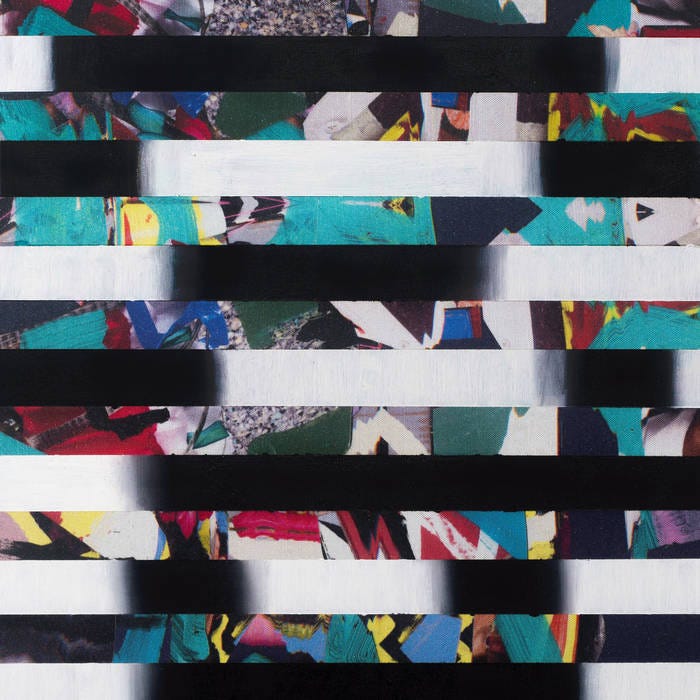
Ishmael Ali: Burn the Plastic, Sell the Copper
This is the debut solo album from cellist Ishmael Ali, who can be heard on albums from Kahil El Zabar’s Ethnic Heritage Ensemble, Angel Bat Dawid, Jason Stein, and Ed Wilkerson—he’s a Chicago guy! He’s also his own man, this is one of the most individual voices I’ve heard in a long time. The album is a brew of grooves, forms, freedom, with some quasi-songs. There’s the experience, listening, of thinking that the structured-sounding music is free, and the free-sounding music is structured. And I’m a sucker for that.
There’s also a sophisticated and extremely well judged use of studio processes and effects, stuttering and jittering sonics that you can hear from stuff like Autechre, but where that is an experiment and see what comes out, Ali adds these as expressive touches, ornamental in the way of repeating a melody in baroque music. The rhythms have a deceptively complicated surface when underneath the pulse is solid and clear, often an innocuous ringing bell defines them.
This is not perfection, there are vocals and thus text that feel overly concrete within the intriguing, subtle shards of music. But there’s also Wilkerson, the excellent trumpeter Corey Wilkes, and Bill Harris at the drums, so the band is something else.
A thought-provoking essay, George. Even if the pattern-based style Riley, Reich, and Glass pioneered has lost currency (probably because it was co-opted so thoroughly by media music), the conceptual underpinnings of minimalism continue to be vitally important. Process music is still very much with us, even as its stylistic manifestations multiply.