
Building the Stairways to Paradise
The possibilities of American utopias

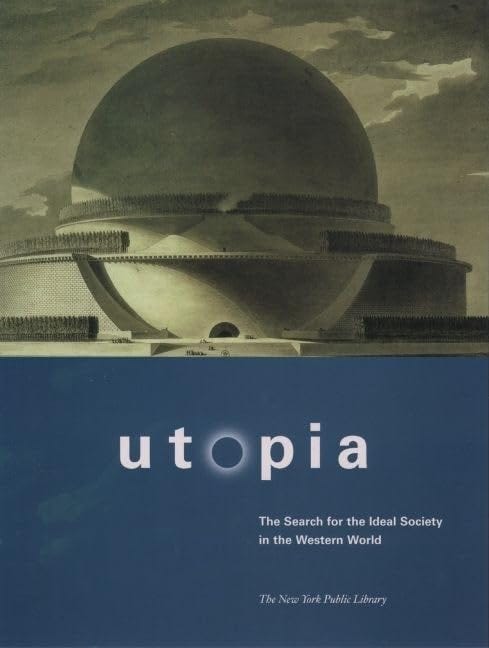
“This country should be a paradise!”
Abiodun Oyewole said that to the crowd before his set with Ava Mendoza at the 2021 Vision Festival. His attitude was both thoughtful and angry, and it drove home the feeling that he was right. And he was, and is. America is a country organized around a set of values that, if the government actually followed and fulfilled them, might indeed make this place a paradise.
Those words have been burned into my brain since I saw this performance, and they light up with every thought about American culture. They’ve been in neon since I wrote last week about how Sun Ra and Charles Ives are the yin and yang of American music. Mix them with Oyewole’s statement and what becomes easy to see is that American music (and much of the larger culture) is a search for utopias of the imaginary past and the imagined future.
Ives and Ra bring together American ideas modeled after the European classical tradition and the broad African-American vernacular music tradition through both a shared attitude toward and means with experimentation, and values that embraced the social and community foundations of music making—those were their utopias. The nuts and bolts of their music, and their visions of society, are in my view the mainstream of American culture, the extreme commercialism of capitalism, especially the current, decadent end-state, is a perversion of those values.
In non-commercial American music (and even in a substantial amount of the commercial kind), there’s really no such thing as the avant-garde and experimentalism, because American music is avant-garde and experimentalist by its nature, that is it’s national quality. There are absolutely no obligations to follow the linear cultural traditions of the old world, and Ives kicked that sense into music that, as an American artist, you could do whatever you wanted. Rather then hone and perfect previous ideas, you could carve out an entirely new, ideal space, a utopia.
American culture is an ongoing process of self-invention, we are creating this country every day and will have to continue to do so until it actually looks and works like what the founding documents tell us it is. We have the culture wars because religious fundamentalists want to enjoy the material benefits of being American but don’t want to let anyone else have any say in the values and pleasures American enjoy. They have a false utopia because they look to a (non-existent) prelapsarian paradise. Music can long for a past as means to preserve values for the future, but that’s different saving the present with millenarianism.
Avatars of the Possible
Ives and Ra used music to build communities. For Ra, this was literal, the communal house he established for the Arkestra. Ives was, in his mind, reaching back to his idealized boyhood, connecting it with Transcendentalist philosophy, America’s great, homegrown intellectual tradition. Ra turned a small utopia into a kind of guidebook with music, Ives used music to spin a vision of a utopia we could perhaps find our way to again. That’s one of the endlessly compelling and complex things about him, and shades his utopianism into millenarianism but not a stagnant nor reactionary one.
There are many good books about him and still a huge amount of literature to be written that would in no way be redundant. What I want to emphasize is that Ives (and Ra) felt that his experimentalism wasn’t out of the ordinary, that it was the most natural thing for American artists, their conceptual creed and aesthetic ethos (this country is after all a political/social experiment). Ives’ place in society as an insurance executive is integral to not just his personality but his achievements. In social terms, he was as square and admirable—in a completely square way—as could be. That comes through in his music, which has plenty of corny sentimentalism that is easy to excuse because it’s as organic as his experimentalism. Combine the two and you have Symphony No. 4.
Ives’ business and his way of making music, were the most normal way to be in America. Cage was like this too, and it is true the two men had important psychological preparation from their fathers, Ives’ the eccentric bandmaster of Danbury, Connecticut, Cage’s an inventor.
There were important late-19th/early-20th century cultural, social, and economic factors in their lives. But changing times never erased the utopian course of American music, they just altered the means and the focus. Ruth Crawford Seeger and Henry Cowell looked for utopia in folk and non-Western traditions, George Antheil in technological innovations, Harry Partch in ancient theater rituals, Cage in ego-negating strategies. Aaron Copland built the most famous sound of American classical music through a ballet about the Shakers and one of their hymns—music about one of the myriad utopian communities that grew and withered in 19th century America.
In the American Wing at the Metropolitan Museum, there’s a gallery which is dedicated to the living room from Frank Lloyd Wright’s Francis W. Little House. Next to it is a room with Shaker furniture, including this piece:

And in that room the museum used to project a loop of the 1958 television production of Appalachian Spring.
Can a chair be utopian? I think this one is. It is functional, social, for everyone, and designed with the values of simplicity and elegance, the egalitarian idea that everyone deserves comfort and beauty. It is anti-reactionary, it is American.
Multi-Verses and Futures
American culture is about anything and everything, that’s what Ives and Cage and Partch all sound American. And the dominance of Black musical culture has even more. There’s a millenarian strain within the roots of the blues, and Afro-Futurism—from Ra to Rammellzee, Cameo, Jonelle Monáe, and beyond—is inherently utopian, the possible sounds of a better future.
There’s Ellington’s idealized urban landscape, spiritual jazz questing for a higher state of being in the universe. There’s a subtle utopianism in Miles Davis’ career, a constant search for form and means that were as simple and and strong as possible, and also never came to an absolute end in time, that could communicate the deepest things to the widest audience in vernacular, intelligent language. Ives doesn’t usually meet jazz, so this is something special and also lovely and moving: Jamie Saft playing “The Housatonic at Stockbridge” from his Solo a Genova album (one of the finer jazz releases of the 21st century if you don’t yet know it):
Jazz remains vital even when there’s no market for it, and Afro-Futurism is one of the most important things in American popular culture. This is music that makes communities on something larger than the neighborhood scale; the fleeting communities of the dance floor, Rasta reggae. Maybe the only place to find these utopias in the 21st century is in Black music—that’s my intuition. Looking back, I realize this is something I’ve not been hearing much in contemporary American classical music—there was a flash of it in the indie-classical movement, and there’s a possibility of it in Tristan Perich’s work, though I don’t think that’s foremost for him.
Classical music has been worn down by the institutional establishments. There’s no millenarianism in recycling the standard repertoire, no utopianism in establish a consensus via PhD programs—American culture needs mavericks, not conformists. The last utopian generation was Reich, Glass, Meredith Monk making music in society, and the Bang on Can composer extending that ethos—though not communal living like the Arkestra, these were literal musical communities within social communities.
The predominant white culture seems far gone into cooptations of consumerist identity, NIMBY politics, the mediocrity of middlebrow media. The prosperity of the Clinton years was the bed on which the easy-going nihilism of a lot of indie music lay, Sunn O))) and Liturgy punched back against the reactionary political and social conformism of the GWOT era, but I can’t hear Geese as any kind of millenarian/utopian revival of “noisy, lawless rock and roll.” Like The Strokes, they feel like the revenge of class-privileged rock, the standard bearers for what I imagine is going to be a specific Park Slope musical and social style that will have a quick half-life.
All that is to say the American project is clearly still ongoing. And considering the ruling regime and nearly non-existent opposition, we could use a revival of utopian thinking in culture. More like Ra, more like Ives, more like Abiodun Oyewole, making the sounds of what America could be.
Album of the Week
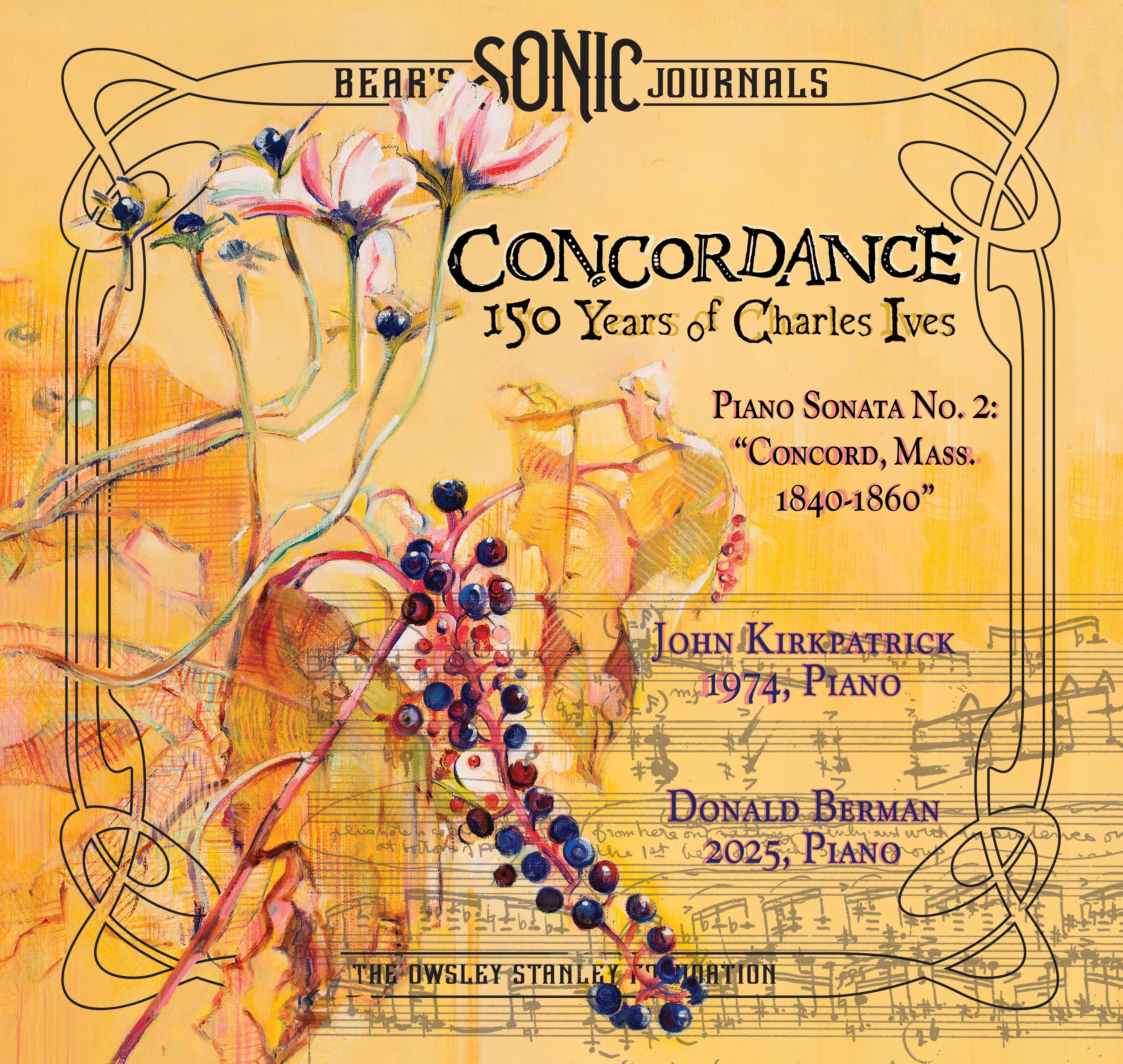
The most famous utopian musical community is the Deadheads. They’ve been embedded as a free-floating internal culture for decades, a social and musical world that has held on to utopian attitudes with the light touch of stubborn optimism. Their roots go deep and further than the band itself—Mariana Timony sent me this 1967 radio show, Tom Donahue hosting Jerry Garcia and Phil Lesh on KMPX, talking about and spinning blue, soul, pop, rock, and the second movement of Ives’ Fourth Symphony. That’s America.
Grateful Dead culture has now produced this wonderful Ives’ album. This are two separate recordings of the monumental Piano Sonata No. 2, “Concord, Mass., 1840-1860.” The backstory is a fascinating tale: Lesh was a deep Ives-head and got Owsley Stanley, the Dead’s sound man and the model for “Kid Charlemagne,” to record a live performance from John Kirkpatrick, one of Ives’ first and most important interpreters, preservers, and scholars. The historical significance speaks for itself.
To this, the Owsley Stanley Foundation has added their own first production, Donald Berman playing the piece live last year (Berman studied under Kirkpatrick and his 2024 recording on Avie is one of the best there is). There’s also the world premiere recording of Concord Legacy:Other Transcendentalists, a set of pieces Berman commissioned. This is an essential Ives recording and just an utterly rich piece of American culture, and the album includes an extensive booklet.
Lesh gets the last word: Ives “was welded into my DNA, ever since I’d heard the [“Concord”] mysteriously appear as background music for one of my finest trips.” Some kind of utopia.