
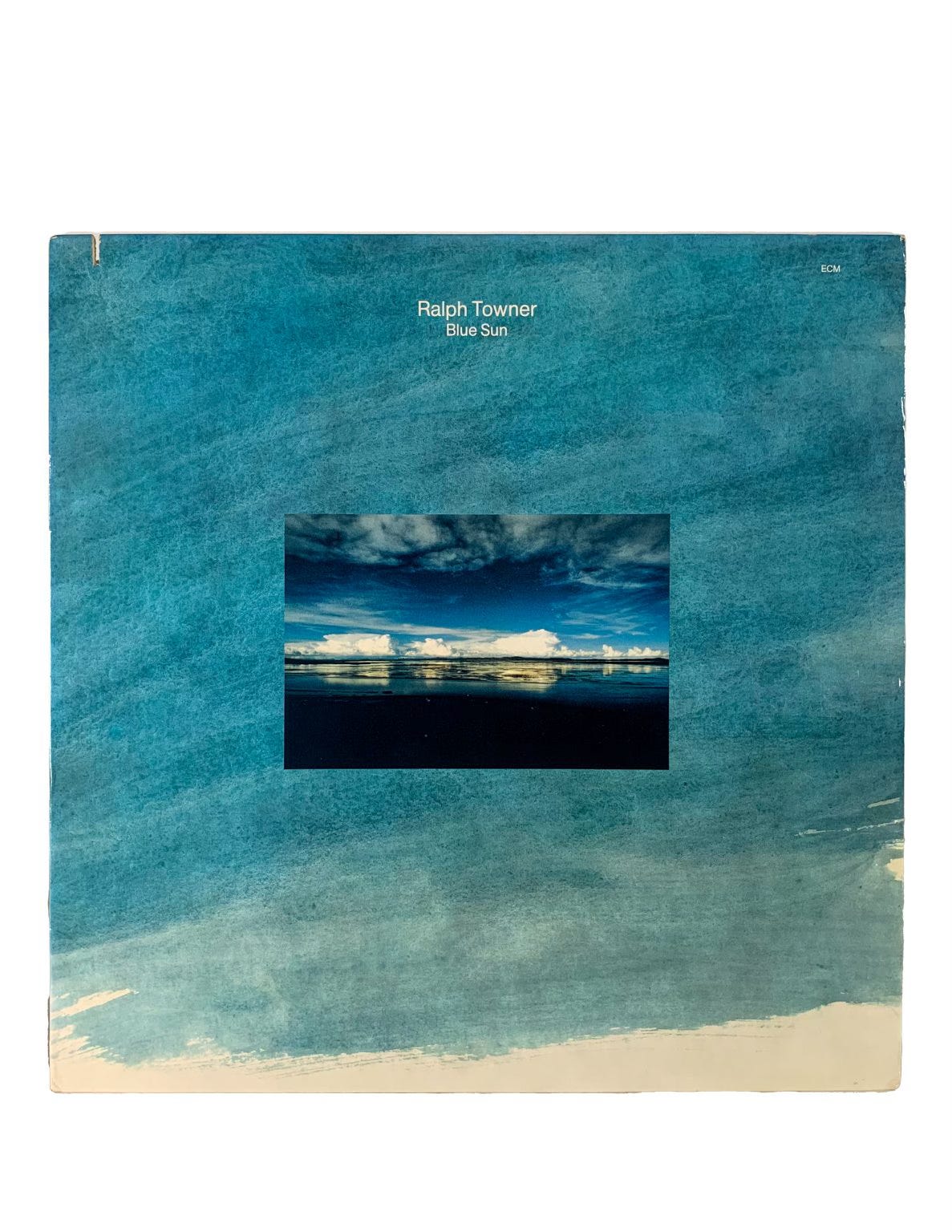
The Essentials: Blue Sun
The possibilities and dangers of the solo performer

“No man is an island,
Entire of itself.
Each is a piece of the continent,
A part of the main…”
The great modern acoustic guitarist (and more) Ralph Towner passed away earlier this week in Rome, age 85. He had classical guitar and lute roots, and made a startling early appearance with the intro to “The Moors” on the second Weather Report album:
Towner came out of the Paul Winter Consort with a fully formed concept that connected the quasi-New Age contemplative aesthetic of that group with the luminous details and space of the ECM studio sound. His cultural presence has the unique feature of two lunar craters being named after his pieces, “Icarus” and “Ghost Beads.” Others will have their favorite Towner albums, like Solstice, Matchbook, the duets with John Abercrombie, or something from Oregon. But this is mine, and one of the essential records in my music library.
I had this back in the day when it first came out on cassette, and I can’t definitively say why I picked it up. This was when I was in college, and I’m pretty certain I got this at the bookstore, where they always had what seemed like a random collection of cassettes for sale, and always several from ECM. I listened to it repeatedly for a year or so and it made deep grooves.
Blue Sun is a one-man-band record, Towner plays guitar, piano, synthesizers, percussion, and some lovely cornet and French horn (his solo guitar-piano album Diary was a precursor). It’s one of the best of its kind, so seamlessly and organically put together that it could be another live-in-the-studio Oregon album. Beyond the impressive technical accomplishment, it’s musically superb in its own right.
Yes, Towner was a wonderful guitarist, with a technique that made it sound like he was plucking the strings with diamonds, but he was even more a wonderful musician. The other instruments are not just ornaments of limited range, he plays everything well and because of that the music is fluid, expressive, it speaks of purpose with clarity. The brass lines are the music he wanted to hear in that voice, not just the music he was able to play, likewise the Prophet 5 patches that are well-crafted.
That craft is in each track. The music is gorgeous, and not just ECM-style atmospheres and moods. There’s plenty of that, like in “Rumours of Rain,” but there’s a bouncy samba, too, “C.T. Kangaroo,” and the cascading, elegant harmonic motion of “Shadow Fountain.” Blue Sun is also a lesson in how to put together an album, with not only the ideal length of forty-five minutes but a sequence of tracks that shapes the whole thing to a fulfilling conclusion. It’s terrific.
Elliot Sharp has put out a name-your-price tribute to Towner. In his words:
Elegy Ralph Towner was composed and recorded the day after learning of Towner’s passing and played on a 1970 Martin D12-20 12-string acoustic guitar.
Album of the Week
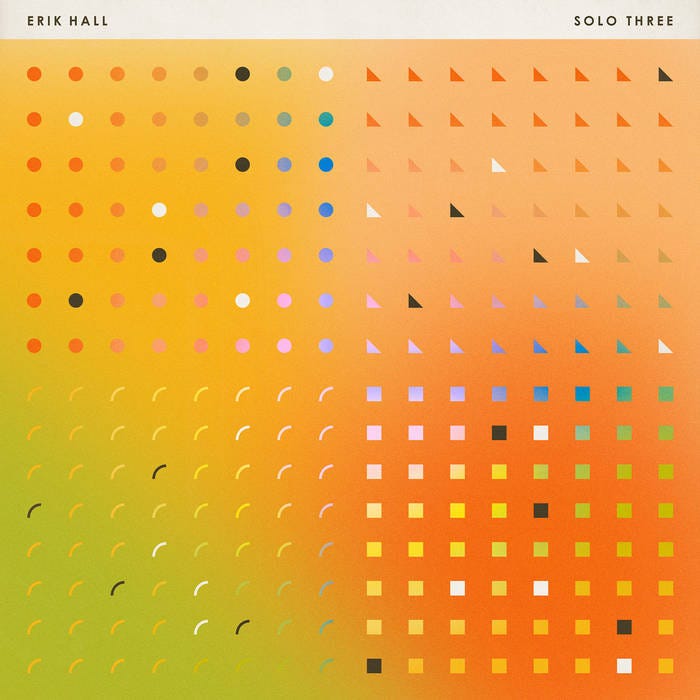
This is Erik Hall’s third album of overdubbed solo performances of modernist, and mostly minimalist music, and is the best of the three so far. But that statement doesn’t stand on its own because the context is important. His first was a version of Music for 18 Musicians, his second Canto Ostinato, two of the greatest masterpieces of minimalist music. Those are albums of impressive technical feats and bad music making.
These have garnered public and critical praise because people are easily impressed by the simplistic thrills of technique in music; Pitchfork loved Music for 18 Musicians, and it actually won an award. The first time I listened to it, I found it loathsome, and while my emotional reaction has softened a bit, the critical one remains: performing this piece as a technical challenge, a demonstration of how a thing can be done, is anti-music. Yes, Hall plays the notes on a variety of instruments and synchronizes his performance to get from the start to the end of the piece. And so what? There’s no other musicians to communicated and interact with, there’s none of the natural rise and fall of breath in the repeated bass clarinet notes. Reich didn’t make the music to demonstrate anything, he made it so musicians could play together as and ensemble and, working together, making something beautiful and meaningful. That’s humanist.
There’s no humanism here other than showing off studio chops. And it sounds bad too; Reich orchestrated the piece to ring with colors, and Hall’s palette is dull, brown, cramped, airless. Canto Ostinato is less offensive, perhaps because of the experience of the first LP, but it’s worse. Again, there’s just no life, no excitement of the musicians spontaneously deciding when to move to the next module. It has a tacky and cheesy sound, and Hall can’t even hear the marvelous refrain that rises around Section 74, he tosses it off and buries it in the mix. Just because you can follow instructions doesn’t mean you are making good music.
This new one is marginally better. Charlemagne Palestine’s Strumming Music is a solo piece, so it works with one performer, although there’s no distinction to Hall’s playing. The Temple of Venus is a gorgeous ensemble composition by Branca, and it’s lifeless and dull here, and so is A Folk Study. Music for a Large Ensemble is actually okay, as if Hall has found some understanding of Reich’s music. I predict people will love this one and it will be on end of the year lists and maybe they should listen to music with others, in an audience, live playing from musicians working together. Not everyone is cut out to go it alone.
“Each man's death diminishes me,
For I am involved in mankind.
Therefore, send not to know
For whom the bell tolls,
It tolls for thee.”
G. just after SLC, I had a similar "Odd cassette" find, Oregon's "Crossing" which played on repeat for about year. Real feels sunk in that. RIP.