
The Great Illuminator
Keith Jarrett showed the way

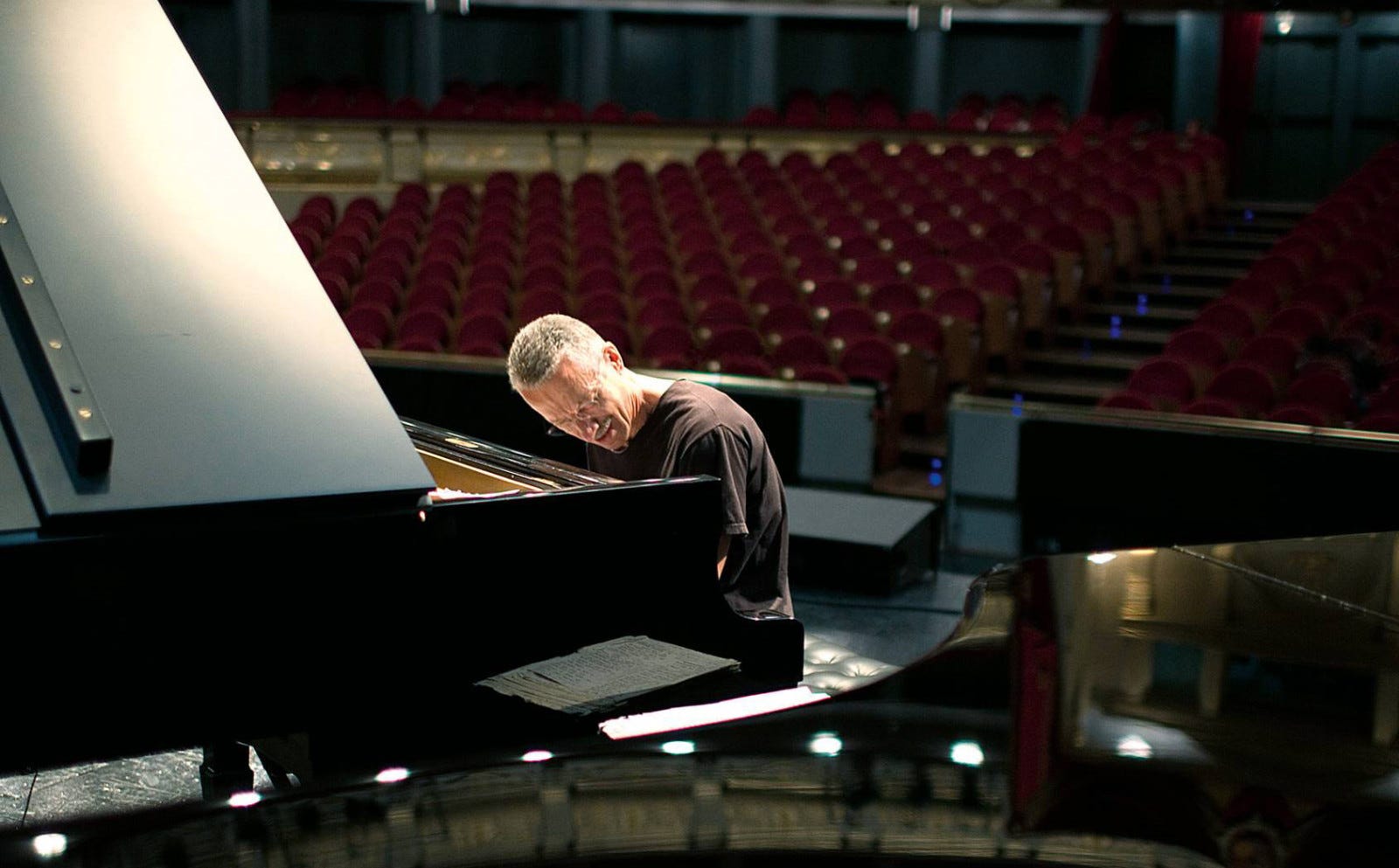
Sowing the Seeds of Love
While I can’t remember the very first time I heard Keith Jarrett’s playing, it was probably on the Miles Davis at Fillmore LP. The first time I remember listening to his playing was one summer when I was in high school and attending an Eastman School of Music jazz camp. In a break between some lesson and another class, I went to the music library and pulled out Belonging and sat down with it on the turntable.
That is one of the classic modern jazz albums, featuring “Long as You Know You’re Living Yours” (which Steely Dan later notoriously cribbed for “Gaucho”), so no surprise that it’s stuck in my mind and my library of favorites since then. What’s more of a surprise to me, what has come to me in the literal space of typing out these two paragraphs1 is how Jarrett’s playing in Miles’ band, which has for decades seemed to me like an outlier in his career, now makes complete sense. Jarrett long ago illuminated things for me, and thinking about him is further illuminating.
Jarrett is one of the great improvising musicians of the recorded music era, and also the most important. That’s not to say that his music making is superior to everyone else’s but that it is more important in the larger context of where music sits in modern culture, how it reaches audiences, and how certain musical ideas and styles do or don’t fit into society writ large. What makes him so important is that he is the Johnny Appleseed of free improvisation, bringing a ubiquitous yet commercially/culturally marginal art form in front of a mass audience of general music consumers, one that numbers in the millions.
Jarrett’s career puts the truth to Derek Bailey’s statement that improvisation is the most widely practiced yet least understood form of music making. Pretty much every musician improvises in some way, and improvisation is not just a staple of jazz but a feature of the blues (though both have only a tiny presence in society), and any rock band worth anything could improvise well. But that’s idiomatic improvisation, in the form and style of the music that frames it. Non-idiomatic improvisation, free music, is shunted by the music industry (venues/promoters/record labels/critics/media outlets) to a commercially inconsequential and publicly infinitesimal niche. As much as the standard bearer for free music, Cecil Taylor, was toward the end of his life lauded by a larger public and caught the attention of some prestige publications and the Whitney Museum, has audience was measured in the thousands.
As the other pianist titan of free improvisation in the same era, Jarrett is easy to place in opposition to Taylor. A long-held general perception of his playing, generated by the massively popular The Köln Concert, is a guy who noodles around with simple major and minor chords, vamps for extended periods, moans along with his own playing a la Glenn Gould and complains about noisy audiences audience when a mouse farts. This is wrong—well, maybe not the latter two items—and a matter of misguided and cloth-eared critical thinking that parallels Adorno’s stupid argument that Schoenberg was revolutionary and Stravinsky reactionary.
Adorno—the man who birthed thousands of smug, half-smart hipsters—got it completely wrong: Schoenberg was desperate to hold onto the past and tried to accommodate the changing world around him while clinging to his Germanic romanticist tradition, while Stravinsky shut the door on romanticism with The Rite of Spring and founded musical modernism with his neo-classical period. So we’ve had generations that instinctively think revolutionary music means atonal, angular, even aggressive and chaotic, and while that was often true before WWI, it hasn’t been for 100 years.
Beauty is Revolutionary
In the 1950s, when Lou Harrison began making gamelan-inspired music with pentatonic and diatonic scales in just intonation, he was a revolutionary going against the status quo because he wanted to hear beautiful things. I always think of Jarrett and Harrison together because of that—and not only because I saw Jarrett play the world premiere of Harrison’s Piano Concerto with the American Composers Orchestra in Carnegie Hall in 1985. Jarrett is the premiere diatonic improviser of our time, and that diatonicism had people thinking that he was some kind of phony, dipping his toe out of standard forms into too-deep waters. That betrays an inability to hear or understand improvisation.
That Jarrett could walk out on stage, sit at a piano, and with nothing previously in mind improvise a whole concert is a unique, rare, and exalted feat. That he could spin out a functional, shapely harmonic form is an even greater one—something Taylor did too—harder to do and harder to make interesting over a long duration than existential gestures and extended techniques. That he could so with the circumstances of The Köln Concert, in physical pain and at a flawed instrument, is a minor miracle. And that he created, out of thin air, a long-form, large-scale diatonic form notable for its pure lyricism, logical progression and development, and loveliness is the marker of his greatness and his importance.
That album has sold four million copies, according to Jarrett biographer Wolfgang Sandner. It MADE ECM as a record label; without it Manfred Eicher would have been recording some American and European jazz musicians, crafting little jewels tucked away into obscure corners. Jarrett is responsible for the global aesthetic influence of ECM, and for how much invaluable music Manfred Eicher has documented. And for fifty years after, Jarrett traveled the world, sitting in front of expectant audiences, and then making up entire concerts on the spot.
Jarrett never pandered to them. ECM has followed him through the years, taping as much as they can, and the solo piano concerts makes up an enormous stand-alone discography.2 Across them, and past the shadow of Köln and the Sun Bear Concerts, Jarrett shows an unsurpassed range. There’s the diatonic lyricism, and also unstructured atonality, music that sounds like a baroque composer working through the possibilities of counterpoint, stretches of his playing that touch on Steve Reich, Bartók-ian gestures or Shostakovich-esque structures.3 Munich 2016 starts with something that sounds like Carter’s Night Fantasies, then in “Part III” it sounds like he’s invented an American Songbook ballad, while “Part XII” is at moments a Ligeti Étude. On the Concerts (Bregenz, München) album, “Part II” from May 28, 1981, sounds like Bach and Handel put into a paper shredder and taped back together by Shostakovich, then played by Henry Cowell pounding the piano with one hand.
That, along with along with crystalline ballads he brought out for encores, like “Somewhere Over the Rainbow” on New Vienna, is the Keith Jarrett solo piano concert. There was nothing like it before he started playing them, there’s been nothing contemporaneous like it, and probably nothing else to come like it. Even a double-bill of Art Tatum and Taylor would not quite cover what Jarrett did, because the incredible range in is playing meant you were always going to be surprised. Yes, disappointed too, but usually surprised in a good way. And millions of people have been listening to him do this in person and on the stereos, what in modern cultural is as avant-garde, experimental, and chance-taking as it gets.
There are mainstream music listeners who probably have no other exposure to free improvisation other than Jarrett, and through him might find their way to more. Others certainly have gone deeper into this world. He has filled hearts with the wonderful possibilities of free music, the deepest, most complex, most powerful form of musical communication, and the one that is the diametric moral and aesthetic counter to the shallow disposability of the music industry and its associated culture. That is simply a good thing for humanity. Thank you, Keith.
P.S. WKCR is broadcasting Keith Jarrett birthday programming today, 9:30 AM to 9:00 PM.
That’s why we write, folks, to think, and if you give away that gift to our mediocre tech lords you ain’t getting it back!
There’s around 80 Jarrett albums total on ECM alone, and around 20 on other labels, the most important of which are the Atlantic and Impulse! recordings.
Outside of jazz and free improvisation, Jarrett has also been a terrific classical interpreter. While his Bach recordings are inconsistent, his albums of Handel Suites and Shostakovich Preludes are as good as it gets. He not only played and recorded Harrison’s Piano Concerto, but made an ECM album as soloist in Samuel Barber’s Piano Concerto and Bartók’s mysterious Piano Concerto No. 3, and this is also as good as these get. On top of that is his album Bridge of Light, notated contemporary classical compositions that is very, very impressive.
Now that you've cued me to watch Jarrett's playing in the video, I hear the connection with the European quartet and therefore (one more degree away) with Köln.
That said, I'm hoping YOU will say more about the connections you hear between the Miles period and the solo concerts.
Along with the Atlantics & Impulse! recordings there is one more on Columbia from '72: 'Expectations', a double set that encompasses Jarrett's stylistic variety & still sounds great 54 years on.
A fine post, George, thank you.